
Los Alamos Monitor

The Los Alamos National Laboratory this month expanded the use of a fluorescent bulb-crushing machine to handle waste bulbs lab-wide. It's a move that could save tens of thousands of dollars in waste disposal fees and will prevent mercury from escaping into the environment.
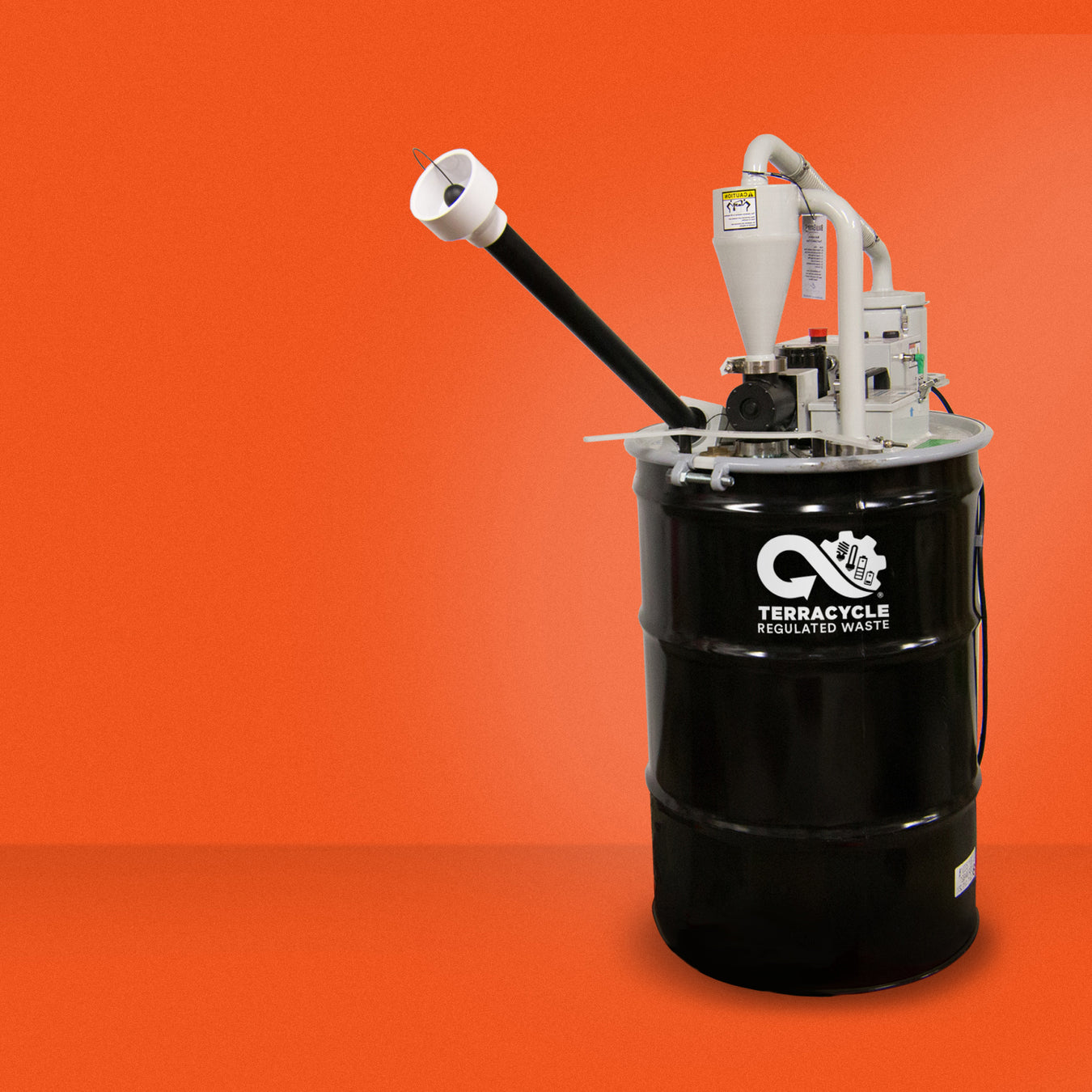
The device is called a Bulb Eater. It attaches to the top of a 55-gallon drum and works like a large food processor. Workers load fluorescent bulbs into a tube, which then sucks them through a propeller-like set of blades, pulverizing the bulbs.
"What you would see inside the drum is a fine glass powder and a couple of beat-up end caps. That's it," said Jim Stanton, a contractor working on the project for the Maintenance and Site Services (MSS) Division.
Fluorescent bulbs contain small amounts of mercury vapor and must be labeled, boxed, and disposed as a type of hazardous waste.
"Every box is a compliance point," Stanton said. "In a landfill, if you get enough fluorescent bulbs you eventually get that mercury leaking into the environment."
But the Bulb Eater captures the vapor in a three-stage filtering process and neutralizes it by converting the vapor to mercuric sulfide, which is non-hazardous.
Stanton estimates that the device can reduce waste volumes by more than 20 times. One cardboard disposal box holds 30 bulbs, but a drum can hold more than 600 crushed bulbs.
The device has been in use at the CMR building and was used to dispose of bulbs from the SM-43 Administration Building. Starting last week, nearly every spent bulb removed from most Lab buildings will meet its fate in a Bulb Eater.
"This has been a big pollution-prevention issue," Stanton said. "It's good to see this really getting going."
Stanton also credited colleagues in the Waste and Environmental Services, Environmental Protection, Maintenance and Site Services, and Industrial Hygiene and Safety divisions for getting the project under way.
Pre-Paid Recycling: The Easy Way to Go Green
Electrical Products and Solutions
Pre-paid Bulb Recycling Systems Negates Liability and Health Concerns
The social mandate to "go green" may seem like one more headache for office managers responsible for creating and policing recycling programs for hazardous and other waste.
Yet tackling the complex problem now may very well avert far greater ills, such as stiff fines from regulatory agencies and a tarnished public image.
Non-industrial companies are most at risk because often they are unaware of state, local, and federal Environmental Protection Agency (EPA) laws. These laws make it illegal to improperly dispose of such common items as spent batteries and fluorescent bulbs. In fact, due to the mercury content in fluorescent, mercury vapor and other lamps and lamp fragments, the federal EPA says recycling is the best way to dispose of these materials.
Faced with the challenge of recycling hazardous waste, which requires storage space, proper containers, and the staff to implement the system, some office managers may be tempted to ease their burden by tossing the newer, non-hazardous low-mercury lamps into solid waste landfills. But if they do, they may be in trouble, because some states prohibit such practices.
Make no mistake that the discovery of illegal dumping habits may force the EPA to slap a company with penalty fees in excess of $250,000. Even worse, a delinquent firm could be forced to clean up a remote and costly Superfund site.
But the more destructive result may be the public perception that a company that defiles the environment is not a good neighbor, which could lead to a public relations nightmare.
Sleep Easy with a New Maintenance System
Mark Funkhouser sleeps peacefully now that he has found a solution to his recycling woes. But it wasn’t always that way. Four years ago when he was appointed custodial services manager for the Chumash Casino Resort in Santa Ynez, Ca., Funkhouser inherited a recycling program that was at best clumsy and inefficient.
Funkhouser’s 120-person staff would round up spent batteries and fluorescent lamps at the large resort complex and drop them into garbage cans. When the cans were full, Funkhouser would either call a local recycler to come haul away the debris or he would locate an available resort vehicle and have one of his staff drive the refuse to the recycling site. The method of disposal was a drain on Funkhouser and his staff.
“We wasted a lot of time coordinating the pickup or drop-off of recyclables,” he said.
Yet Funkhouser knew that recycling was important to the Chumash tribe members who own and operate the facility. Often he would hear tribe elders talk about their concerns for the earth, and knew that anything less than a vigorous recycling effort might make his employers appear hypocritical. The resort now recycles about 30 percent of the 300,000 pounds of garbage generated each month.
“We’re a Native American firm, and we’re very respectful of the earth. We need to do our part,” he said.
The turnaround for Funkhouser came two years ago when he discovered the EasyPak ™ Recycling Program offered by Air Cycle Corporation, of Broadview, Ill. The unique service freed the custodial staff of sole responsibility for disposing of spent bulbs and batteries, and improved awareness of recycling among the Chumash Casino Resort’s 1,600 employees and their guests.
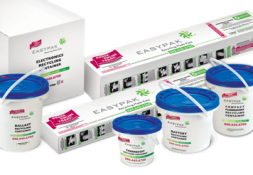
For one pre-paid fee, Air Cycle provides the resort with the whole works – storage containers for bulbs, batteries and ballast, shipping to the recycling center, recycling fees, and even a certificate of recycling. Yet very little paperwork is involved.
Funkhouser said EasyPak™ boxes of various sizes are placed in the resort warehouse where engineers drop off spent fluorescent lamps. Plastic buckets are placed throughout the resort – in public areas, as well as the employee dining area – so that spent batteries and ballast can easily be collected. When the containers become full, they are sealed by custodial employees who then place the boxes and buckets on the loading dock, where FedEx Ground picks them up and takes them away.
“It’s definitely solved that problem. Basically, now my department doesn’t have to get involved anymore. All we do is order the boxes. The Engineering Department calls us when they’re full and we walk them up to the loading dock. We don’t even have to call anybody, because Fed Ex already comes twice a day,” said Funkhouser.
Although spent fluorescent lamps – about 200 per month, large and small – present the largest problem, spent batteries are a close second. Each month the resort recycles about 100 double-A batteries used in the wireless headsets and microphones needed to manage concerts and other events.
Also, resort employees who meet and greet the public all wear badges that flash the monthly give-away promo. When the small batteries needed to power the badges wear out, employees simply drop them into one of the buckets situated in the three-story gaming facility and four-story hotel. The buckets have inspired recycling questions and respect from guests.
“It raises awareness, definitely. We have so many buckets out there, everyone knows we’re concerned with recycling – employees and guests,” he said. “Before, there wasn’t any awareness that we were recycling. Now we place buckets where the end-user is going to see it and help us recycle. With sixteen hundred employees, that’s a lot of batteries,” he said.
Air Cycle CEO Scott Beierwaltes said that when his firm began offering the pre-paid EasyPak™ Recycling Program little more than a year ago, they serviced only a "handful" of clients. Now they have more than 4,000 facilities utilizing the program.
“We weren’t sure how many would participate. Now demand is growing in the neighborhood of 15 percent per month. It’s become surprisingly popular,” he said.
Beierwaltes said environmental laws are far more stable now than they were years ago. But some layers of complexity remain because the federal EPA has allowed states to write some of their own variations on environmental guidelines. To help prospective clients sort through the morass of state requirements, Air Cycle's website links to EPA guidance documents.
“We work with them to understand their facility and location. Some staffs are so overwhelmed, the thought of spending extra time on their spent bulbs is a major turnoff,” he said, adding, that while some people don’t care about illegal dumping, many others want to do the right thing. “They just haven’t been exposed to a good idea, something they can get behind.”
Air Cycle has also created the Bulb Eater ™ for large firms that prefer crushing fluorescent lamps on site. The ingenious, airtight device stores lamp debris in a protective steel drum. When the drum is full, Air Cycle arranges for it to be taken to a local recycling plant.
Fluorescent Lamp Disposal: It Can Be Affordable and Easy

Because they contain mercury, spent fluorescent lamps increasingly cannot be trashed in dumpsters as a solid waste. This is a major challenge for facilities across the country since nearly every facility uses them and more than 650 million lamps are disposed each year.
Mercury is linked to severe health issues such as blurred vision, numbness in limbs, speech impairment, severe convulsions, developmental problems, loss of consciousness, insanity, birth defects, possible autism, and more. A single four-foot fluorescent tube contains from five to 50 milligrams of mercury. When conventional disposal methods are used, mercury vapors can travel over 200 miles. Hence, the Environmental Protection Agency (EPA) regulates fluorescent lamps and stipulates strict guidelines for their disposal.
Facilities that do not comply with these regulations not only bring harm to the environment, they risk costly restitution. In fact, if fluorescent lamps are found in landfill sites and traced back to the offending parties, they can be penalized with the cost of the landfill cleanup, in addition to any other fines levied. Hence, it greatly benefits companies and institutions to adhere to EPA guidelines and dispose of fluorescent lamps appropriately.
Many companies have found such disposal to be both labor and cost intensive, but have endured the burden in an effort to remain compliant. These hurdles have caused the marketplace to develop new methodologies. As a result, fluorescent lamp disposal is far easier and less costly than ever before.
Prior to coming across these new methods, Sheela Backen, Integrated Solid Waste Program Manager at Colorado State University, had to supervise a complex and costly method of fluorescent lamp disposal-packing used lamps back into original cartons and loading them onto a truck. The truck would then transport the lamps to a recycling facility.
"That method presented a lot of problems," Backen says. "We couldn't get people to make sure the cartons were full, taped and marked with the date. When the truck was coming to pick them up, we would have anywhere from six to eight people filling boxes, taping them back up, and then loading this truck. It was not cost-effective at all."
A New, Better Fluorescent Lamp Disposal Method
Not long ago, Backen happened across a device that made her problems history-the Bulb Eater, from Air Cycle Corporation of Broadview, Ill. "The bulbs are brought to a specific location. I send one person over there for a couple hours a week to crush the tubes. It's very quick and efficient, and I don't have to waste so much time trying to load a truck."
This OSHA and EPA-compliant machine crushes more than 1,000 fluorescent lamps (amount depends on size of lamps) and packs them into a 55-gallon drum. The process is fully enclosed and filtered, so that the glass, aluminum, and harmful vapors are contained. When full, the drums are picked up and transported to an EPA permitted lamp recycling facility where the contents are separated, treated, and ultimately reused. Backen utilizes their easy-to-use online scheduling to arrange the drum pickup, and has been able to reduce the needed labor from six to eight personnel down to one.
"The cost of shipping a truckload of boxed tubes is a whole lot more than shipping a drum of crushed tubes," Backen adds. "That was another cost-effective factor that we were looking at when we bought this machine."
Mark Funkhouser, Custodial Services Manager with The Chumash Casino Resort in Santa Ynez Valley, Calif., was having similar problems disposing of fluorescent lamps. His method was through a local waste hauler, who would remove the lamps in bins.
"It required a lot of attention," Funkhouser says. "It required labor because we had to pack the bulbs in different kinds of bins and place them wherever the truck pickup was going to be. We also were never sure of the outside contactor's schedule, so we really didn't know when he was going to come."
Funkhouser then found a removal method online that greatly reduced the attention and labor-a pre-paid recycling program, called EasyPak. "EasyPak is a great system because we can just put the box in a corner of the warehouse, and then as the engineers bring the bulbs back, they put the bulbs in the box and it's ready for shipping. When it gets full, we just close up the top, stick a label on the box and ship it off and our part is done. It's definitely reduced our labor."
This prepaid service allows lamps to be shipped in custom-made secure containers, via FedEx Ground, to licensed recycling facilities-a program Funkhouser and his department have found very convenient and cost-effective. The program also provides online access to recycling certificates, shipment tracking, and ordering replacement containers. Orders can even be set up for new containers to ship automatically as full containers are received at the recycling centers.
Both Backen and Funkhouser have found their recycling company to be very accommodating of their individual fluorescent lamp disposal needs. Backen is especially conscious of which recycling company is being used. This company has allowed her to specify destination recycling companies based on her own research of current EPA ratings and licensing. Funkhouser is happy that a company rep contacts him whenever they place an order to ensure they're getting the right amount of the correct containers, and to see if they need anything else. Recycling Certificates can be automatically sent to Funkhouser so he knows the bulbs were indeed recycled.
Funkhouser also has the periodic need for recycling batteries and ballast, which he is able to handle through the same EasyPak program, giving him one source for his needs.
The decision of which type of service to use is dependent on the facility size and the quantity of lamps needing disposal. "A facility totaling over 200,000 square feet in size is a great candidate for the Bulb Eater, especially when they have limited storage space," says Scott Beierwaltes, CEO of Air Cycle. "Smaller facilities are typically more attracted to a pre-paid program like EasyPak. They want the same convenience, but usually don't generate enough lamps to justify a Bulb Eater."
Finally, the expensive necessity of proper fluorescent lamp disposal has been made less tedious and far more cost-effective.
When the Lights Go Out in Las Vegas, Hazardous Waste Disappears
Las Vegas - An innovative recycling program has made one of this city’s most popular meeting places a green oasis by shipping out the toxic remains of spent light bulbs.

The Las Vegas Convention & Visitors Authority (LVCVA) was founded to strengthen the area’s convention business and eliminate a troubling economic problem: the cyclical nature of the tourism industry. But the LVCVA doesn’t just market this city’s gambling and pleasure palaces. It operates the Cashman Center as well as the Las Vegas Convention Center, which totals 3.5 million square feet of meeting rooms and exhibition space.
How many light bulbs does it take to illuminate such an emporium? More than electrical supervisor Joe Toro cares to count. Seven years ago Toro took it upon himself to find a method for disposing the thousands of fluorescent light bulbs he and his six-member crew replace each year. He could no longer tolerate the existing recycling plan: store spent bulbs in cardboard boxes (30 or so per container), and then wait for them to be hauled away by various trucking services.
The boxes took up valuable storage space and occasionally they would tumble, causing bulb breakage. This created even greater problems: The hauler refused to remove broken bulbs. Why? They contain mercury, which is linked to serious health issues, such as blurred vision, severe convulsions, and birth defects. As a result, the Environmental Protection Agency (EPA) regulates fluorescent lamps and sets strict guidelines for their disposal.
“We had too many problems with boxes being stored, or lamps that don’t fit in boxes, or that fall off the back of the truck,” Toro said. “Too much hassle and too much money for the service we were getting.”
Gambling on Green
Toro began searching online for an on-site solution after a colleague recommended a lamp-crushing system. It wasn’t long before Toro was convinced that the Bulb Eater® developed by Air Cycle Corp. of Broadview, Illinois, was the answer. “I realized that this was an environmentally-friendly piece of equipment that would speed up production about 500 percent compared to the other way,” Toro said. “It’s been well worth it.”

LVCVA now has two Bulb Eater® machines at the Las Vegas Convention Center, where Toro and his crew do the majority of lamp crushing. This OSHA- and EPA-compliant device crushes more than 1,000 fluorescent lamps (amount depends on size of lamps) and packs them into a 55-gallon drum. The process is fully enclosed and filtered, so that the glass, aluminum and harmful vapors are contained. When full, the drums are picked up and transported to an EPA-approved lamp recycling facility—all arranged by Air Cycle. No muss, no fuss.
When Toro requested funding for the lamp crushers, no one was forcing him to comply with anything but common sense. “We were never told to do it,” he said. “This was a voluntary process that I started. I just took this upon myself. It’s not right to throw lamps into the landfill. Environmentally, recycling is the right thing to do. We want to look good in the public eye. It was a smart choice.”
Very smart and prescient, too. Toro provided a safe environment for employees and guests, and when the EPA finally visited, the LVCVA already could boast of a green track record. In this day and age, anything less than EPA compliance can cause serious trouble for corporations and other businesses.
For example, the discovery of illegal dumping habits may cause the EPA to slap a company with penalty fees in excess of $250,000. Even worse, a delinquent firm could be forced to clean up a remote and costly Superfund site. And then there is the matter of public perception. A company that defiles the environment is not a good neighbor—or host—and such a revelation could lead to a public relations disaster. Not the kind of attention craved by LVCVA, which has an annual budget of $284 million for fiscal year 2008 and 574 authorized employment positions.
Savings and Upgrades
Aside from staving off environmental concerns, the Air Cycle Corp. Bulb Eater® systems have saved LVCVA a lot of time and money. The Bulb Eater® 55-gallon drum, which Toro estimates can hold at least 1,000 crushed lamps, can be operated by one crew member. This is a big improvement over the previous method of storing lamps in boxes, a process that demanded cooperation from the whole staff. “It was way too cumbersome,” Toro said.
Also, the old system frustrated Toro because he was paying two fees: slightly less than $1 per new lamp, and up to $3 to dispose of spent lamps. The Bulb Eater® has slashed recycling costs to about $.30 cents per lamp. Obviously, the machines quickly paid for themselves, Toro said.
As a result, LVCVA has approved Toro’s request to upgrade the machines in 2008. The new Premium Bulb Eater® not only crushes spent fluorescent lamps of any length into 100 percent recyclable material, but also captures more than 99.99 percent of the vapors released. The three-stage filtering process removes hazardous particulates and gases, and can now hold up to 1,350 fluorescent lamps. Also, a new safety control panel has also been added, giving the operator added security by monitoring seven aspects of the machine to better ensure operator safety.
Toro said he and the LVCVA have been so busy growing the convention center, there has been no time to toot their green horn. But the 13-year employee said that will change soon. The board of directors has named Robert Jones assistant chief engineer. His task is to expand the recycling program and make the convention center as green as humanly possible. This goal is in conjunction with the LVCVA’s quest to lure 43 million visitors to Las Vegas by 2010.
“We’re so bogged down with growth, we don’t have time to brag about the good things we do,” Toro said. “But we’ve started talking about showing Las Vegas just what we do. You look at what’s going on in the world today…we don’t need to be contributing to that.”
Read full article »